

Bitcoin continued its sharp decline on Friday after President Donald Trump announced sweeping new tariffs and export restrictions against China, reigniting fears of a deepening trade war between the world’s two largest economies.
The world’s largest cryptocurrency fell 8.4 percent to $104,782 as of late afternoon trading in New York, extending a week of losses driven by heightened geopolitical tensions and market volatility. Ethereum, the second-largest digital asset, dropped 5.8 percent to $3,637. The selloff mirrored losses in global financial markets, with the S&P 500 sliding more than 2 percent following Trump’s announcement.
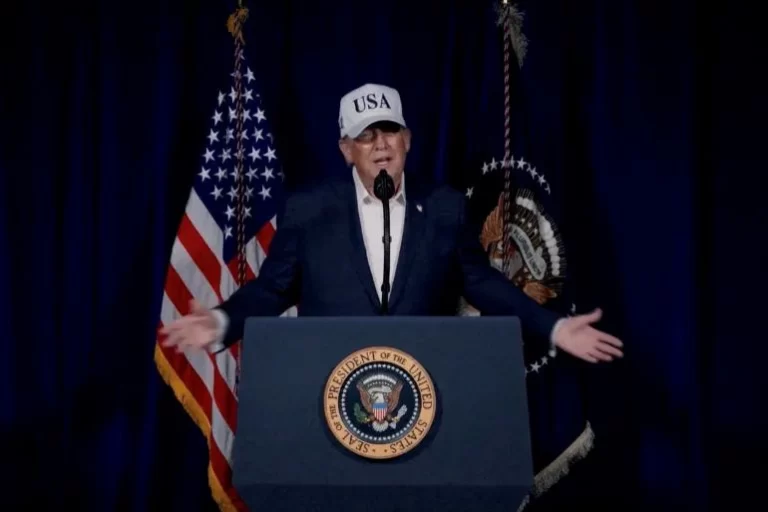
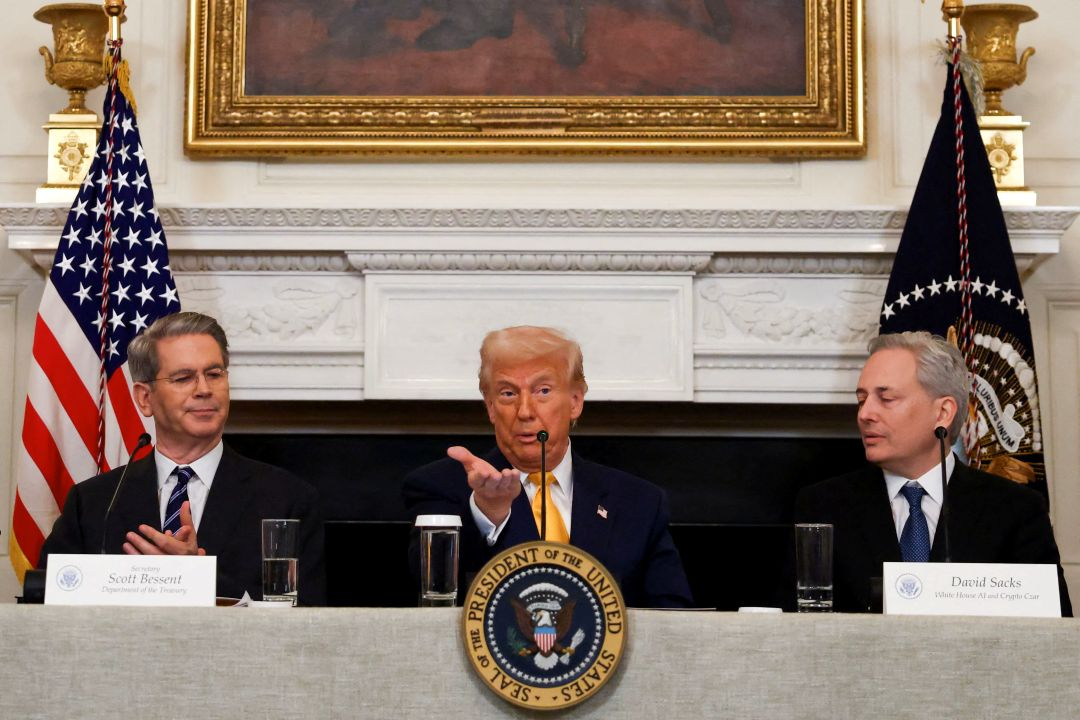
In a series of statements and social media posts, Trump said his administration would raise tariffs on all Chinese exports to the United States to 100 percent beginning November 1. The move, he said, was a response to Beijing’s decision to impose new export restrictions on rare earth minerals, a crucial input in technology manufacturing, electric vehicles, and defense industries.
Trump accused China of taking an “extraordinarily aggressive position on trade” by implementing what he described as “large-scale export controls” on critical materials. He said the measures would apply broadly to global markets and warned that Washington would retaliate immediately if China took additional actions.
The president’s comments came hours after Chinese state media reported that Beijing had issued formal guidelines limiting exports of certain rare earth elements used in semiconductors, renewable energy equipment, and advanced electronics. Analysts said the Chinese move appeared designed to leverage its dominant position in the global supply of these materials in response to growing U.S. restrictions on technology transfers.
Trump’s escalation represents one of the most severe trade measures of his presidency, effectively doubling tariffs on Chinese imports and introducing broad export controls on software deemed “critical” to U.S. national security. The announcement sent investors rushing toward safer assets, lifting the U.S. dollar and Treasury yields while dragging down equities, commodities, and cryptocurrencies.
The cryptocurrency market, which often reacts to broader shifts in investor sentiment, saw heavy liquidations following the announcement. Bitcoin had briefly stabilized earlier in the week but turned lower as concerns over a protracted trade standoff grew. Analysts said digital assets have increasingly tracked risk-sensitive markets, reflecting their role as speculative instruments rather than safe havens.
Trump also indicated he might cancel a planned meeting with Chinese President Xi Jinping later this month, saying there was “no reason” for talks given China’s recent “hostile order.” His remarks further undermined hopes for a diplomatic resolution and heightened expectations of economic retaliation on both sides.
Economists warn that an all-out trade confrontation could disrupt global supply chains, raise consumer prices, and slow economic growth in both nations. China remains the largest exporter of rare earth elements, which are essential to advanced manufacturing worldwide. The United States, though seeking to expand domestic mining and refining capacity, remains heavily reliant on Chinese imports for many of these materials.