


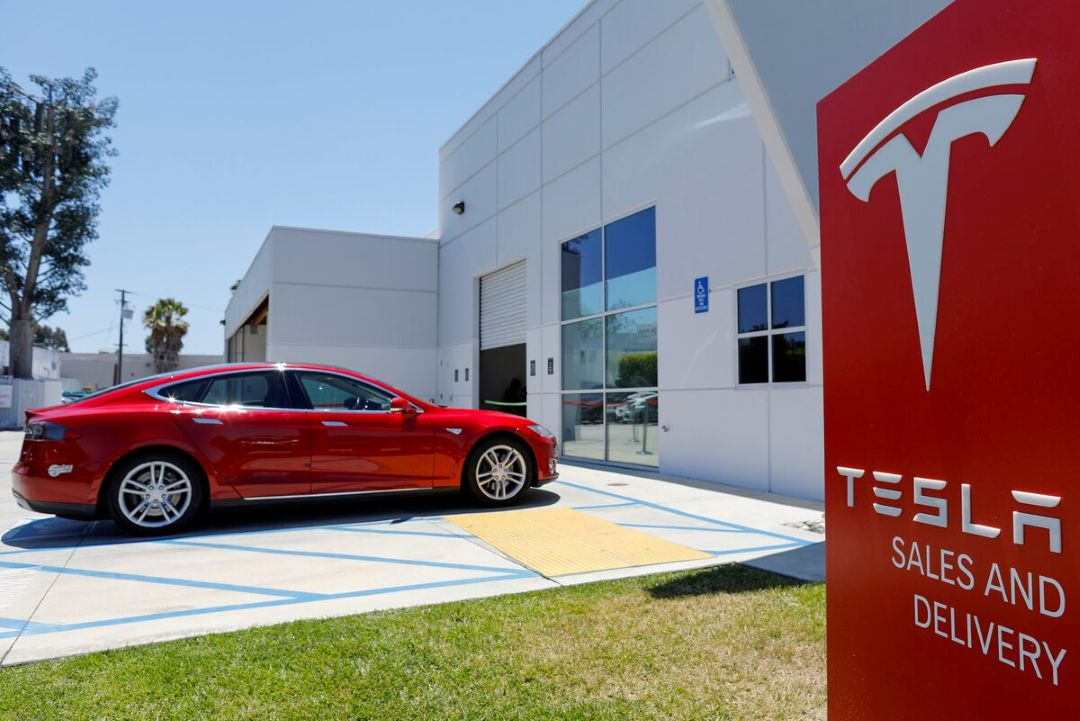
Tesla delivered nearly half a million vehicles in the third quarter, setting a new company record, but the stock dropped sharply after an early rally as investors questioned whether the momentum can last without U.S. tax incentives.
The company announced 497,099 deliveries between July and September, surpassing both the previous quarter and the same period last year. The surge was driven largely by the expiration of a $7,500 federal tax credit that pulled forward consumer demand. Customers who placed firm orders by September 30 will still qualify for the credit when their cars arrive in the coming weeks.
Despite the record numbers, Tesla’s shares closed down 5.1 percent on Thursday at $436. The stock had opened at a new 2025 high but reversed losses during the session, falling below its 10-day moving average. Analysts said the decline reflected concern that demand would weaken in the months ahead as incentives fade.
China’s BYD remained the global leader in electric vehicle sales. The company reported 1.1 million deliveries in the third quarter, more than double Tesla’s total, though down slightly from its previous quarter. BYD also led in battery-only vehicles, a category where Tesla faces rising competition not only from Chinese automakers but also from established firms such as Geely.
Tesla’s strength came primarily from its Model 3 and Model Y lines, which accounted for more than 480,000 of the deliveries. The company also produced 447,450 vehicles in the quarter, indicating it drew on existing inventory to meet the surge in demand.
While deliveries grabbed headlines, Tesla also highlighted progress in its energy business. The company deployed a record 12.5 gigawatt hours of energy storage in the third quarter, up from 9.6 gigawatt hours in the previous quarter. The segment has grown steadily and remains one of Tesla’s strongest areas outside of its vehicle lineup.
Attention among investors is now shifting to Tesla’s self-driving technology. Chief executive Elon Musk has said that the latest version of its Full Self-Driving software, known as FSD v14, would begin a wide release soon. Musk has suggested the update will be a significant leap, but as of this week the software had not been rolled out.
Looking ahead, analysts expect Tesla to face a sharp slowdown in the fourth quarter. With the U.S. tax credit no longer available, demand is likely to decline, prompting speculation that Tesla and other manufacturers may lower prices to maintain sales. The company is also preparing to launch a lower-cost version of the Model Y, though analysts warn that its appeal will depend heavily on price relative to the tax-incentivized models sold earlier this year.