

For years, cities like Dubai and Doha marketed themselves as islands of calm in a turbulent Middle East. That image was jolted this weekend when Iran launched a sweeping barrage of missiles and drones at several Persian Gulf nations, killing at least four people and injuring more than 100 across the region.
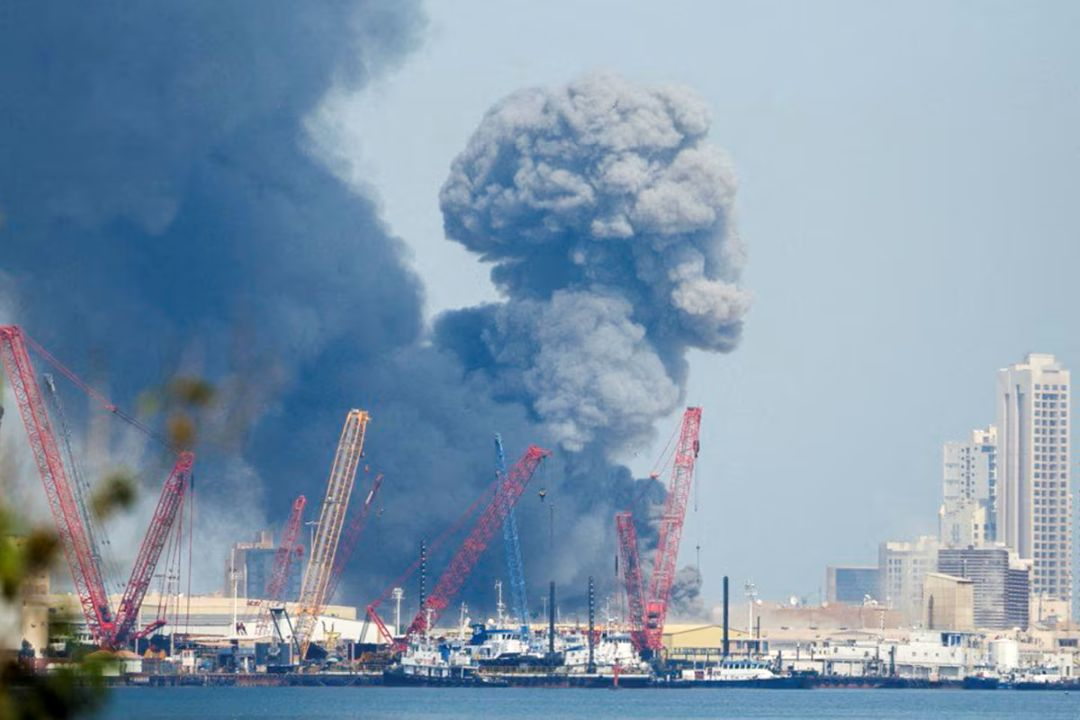
The strikes targeted the United Arab Emirates, Kuwait, Qatar, Bahrain and Oman, according to official tallies released by each government. Defense officials in the Emirates said more than 540 drones, 165 ballistic missiles and two cruise missiles were fired toward their territory. Most were intercepted, but several penetrated air defenses and struck civilian sites.
Dubai, the commercial hub of the UAE and a magnet for foreign investors, saw some of the most visible damage. Explosions shattered windows in high rise apartment buildings, and fires broke out at luxury hotels. The city’s international airport sustained damage that injured four people. Residents shared videos of streaking projectiles crossing the night sky near landmarks that have long symbolized the emirate’s prosperity.
Officials across the Gulf have sought to limit panic, emphasizing that the majority of incoming weapons were neutralized. Still, the attacks rattled financial markets. Stock exchanges in Saudi Arabia, Oman and Bahrain fell sharply on Sunday, while Kuwait temporarily halted trading. Airspace closures disrupted flights, stranding travelers and suspending regional transit.
The casualties underscored the vulnerability of the region’s large expatriate population. In the UAE, those killed included nationals of Pakistan, Nepal and Bangladesh. Authorities said the injured represented a mix of nationalities, reflecting the diverse workforce that underpins Gulf economies. In Kuwait, one person was killed and more than 30 were injured during air defense engagements. Qatar reported at least 16 injuries. Bahrain said several residential buildings in its capital were struck.
Iranian officials said the operation was aimed at military facilities used in operations against Iran, though videos and on the ground reporting indicated that civilian infrastructure was also affected. Hotels, airports and residential complexes were among the sites damaged.
The Gulf states have long relied on a delicate balancing act, maintaining close security ties with the United States while pursuing diplomatic channels with Tehran. Oman has often served as a mediator in regional talks. Yet none of the countries escaped the latest escalation, which followed U.S. and Israeli strikes on Iranian targets.
Despite the shock, daily life in some areas resumed quickly. Public events continued in Dubai, and beachgoers returned to the shoreline even as authorities assessed structural damage. Officials sought to reassure residents that air defense systems had functioned effectively and that security remained intact.
Analysts say the attacks challenge the Gulf’s carefully cultivated brand as a stable refuge for capital and tourism. Yet they caution against declaring a lasting shift. Defense systems limited casualties, and infrastructure damage, while dramatic, was not catastrophic.