

The United States carried out a series of military strikes against Iranian targets Tuesday, escalating tensions in the Middle East just as diplomatic efforts appeared to be moving toward a possible agreement between Washington and Tehran.
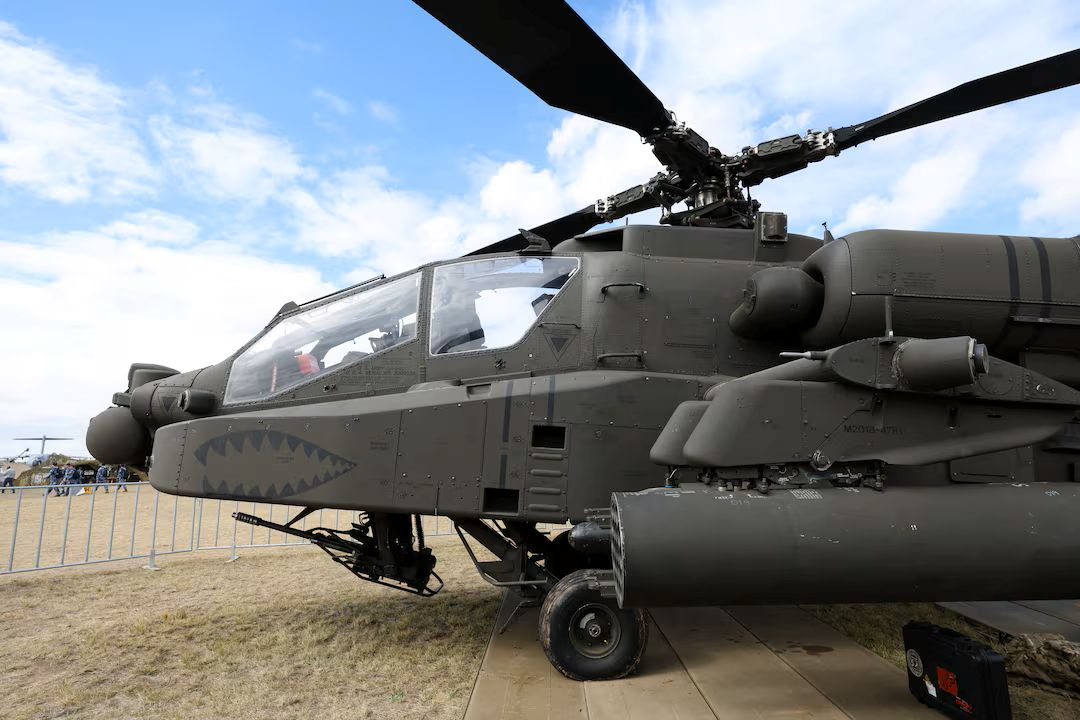
U.S. Central Command said the operation was conducted in response to the downing of a U.S. Army Apache helicopter near the Strait of Hormuz a day earlier. According to military officials, the strikes targeted Iranian radar installations and ground control facilities and were described as a proportional act of self defense. The operation lasted several hours before military commanders declared it complete.
President Donald Trump confirmed that the helicopter had been brought down during a patrol mission in the strategically important waterway. While the aircraft was lost, both pilots survived and were rescued. Trump characterized the incident as an unjustified attack on U.S. forces and signaled that a strong response was necessary.
Military officials said the helicopter crew was recovered using an unmanned surface vessel, marking what appears to be the first rescue of American service members by a drone operated boat. The two soldiers were transported for medical evaluation and were reported to be in stable condition with non life threatening injuries.
A U.S. official familiar with preliminary assessments indicated that investigators believe an Iranian drone may have been involved in the helicopter’s destruction. Iran has not formally acknowledged responsibility for the incident. Iranian officials instead suggested that foreign military forces operating near Iranian territory assume significant risks by remaining in the region.
The American strikes were followed by Iranian retaliation. Early Wednesday, missiles and drones were launched toward military installations in Jordan, Bahrain and Kuwait, broadening concerns that the confrontation could spread beyond the waters of the Persian Gulf. The exchanges have placed additional pressure on a fragile ceasefire that has largely held since April.
At the same time, diplomatic efforts remain underway. Trump had recently expressed optimism that negotiations over Iran’s nuclear program were nearing completion and suggested an agreement could be reached within days. Administration officials have repeatedly described talks as being in their final stages, though no formal breakthrough has been announced.
Iranian officials have offered a more cautious assessment. While acknowledging progress on several major issues, Tehran has indicated that significant differences remain and that any suggestion of an imminent deal would be premature. Discussions involving regional intermediaries, including officials in Qatar, have continued behind closed doors.
The latest military exchanges also highlight the continuing importance of the Strait of Hormuz, a critical shipping route through which roughly one fifth of the world’s oil supply passes. Disruptions in the area have repeatedly rattled energy markets and raised concerns about global economic stability.