


A violent knife attack in Northern Ireland has triggered days of unrest, exposing deep political and social tensions over immigration, public safety and misinformation that have increasingly shaped debate across the United Kingdom.
The violence began after a 30 year old Sudanese asylum seeker was charged in connection with a stabbing that left a man seriously injured in Belfast. Authorities charged the suspect with attempted murder, making threats to kill a second individual and possessing a knife. Investigators have said there is no indication the attack was linked to terrorism, and a motive has not been publicly established.
Police allege the suspect used a kitchen knife to inflict severe injuries on the victim, including wounds to the head, face and back. Graphic video footage of the attack spread rapidly across social media platforms, drawing widespread public attention and fueling anger in local communities.
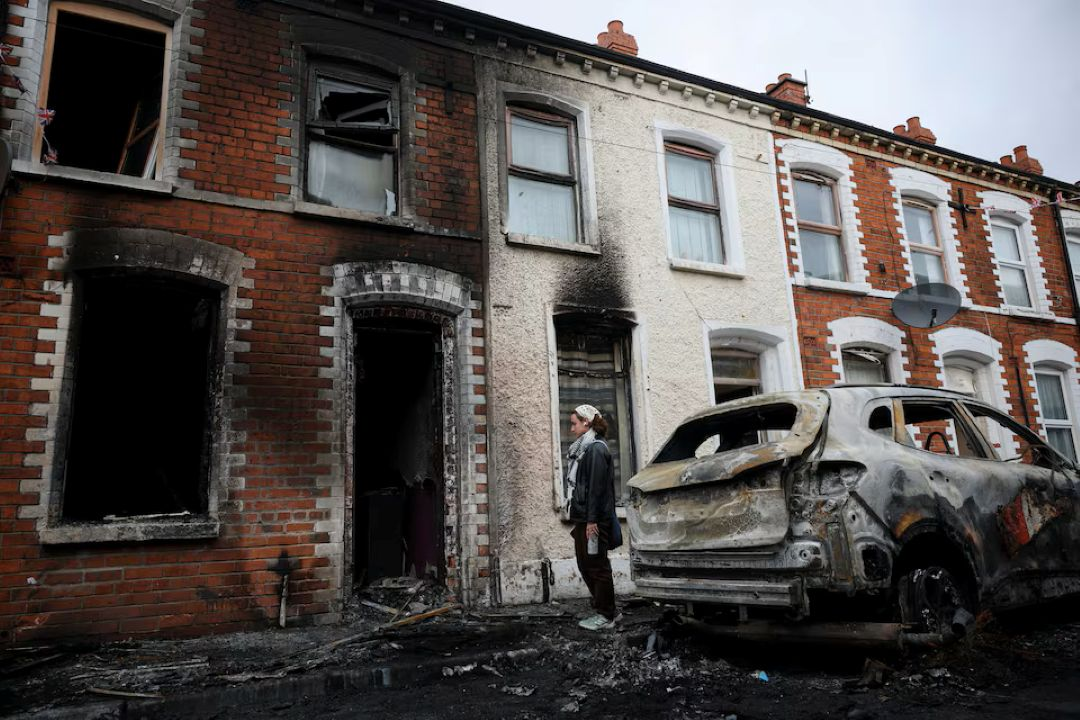
The incident quickly became a flashpoint for broader frustrations surrounding immigration. Within hours of the suspect’s arrest, demonstrations emerged in Belfast and several surrounding areas. What began as protests soon escalated into violent disorder as masked individuals attacked police officers, damaged property and targeted homes believed to be occupied by immigrants.
Officials said more than two dozen people were forced from their homes during the unrest. Several vehicles, including a public bus, were set on fire. At least 12 police officers were injured while responding to disturbances that stretched across multiple nights.
Political leaders from across Northern Ireland’s power sharing government condemned the violence and urged calm. Government officials described the attacks on immigrant communities as racially motivated and warned that criminal behavior was being carried out under the guise of public protest.
Many immigrant families reported feeling unsafe as tensions spread. Refugee support groups said some parents kept children home from school while others sought temporary shelter elsewhere. Community organizations have since called for increased protection for vulnerable residents and efforts to prevent further retaliation.
The unrest echoes previous episodes of violence in Britain that followed high profile crimes involving suspects from minority backgrounds. Similar disturbances erupted after several fatal stabbings in England over the past two years, often fueled by misinformation circulating online. In some cases, false claims about suspects’ identities spread widely before official facts became available.
Authorities and independent experts have repeatedly warned that social media platforms can accelerate public anger by amplifying unverified information. Police leaders have argued that online misinformation has become a significant factor in public disorder and can rapidly transform isolated criminal incidents into broader social conflicts.